Nail fungus walks into your salon more often than you think. Studies estimate that onychomycosis affects roughly 10% of the general population and up to 50% of adults over 70. Some of these clients know they have a problem. Many do not. How you respond determines whether you protect your other clients, stay within your legal scope, and keep the affected client’s dignity intact.
How to Recognize Nail Fungus Signs
You are not a doctor. You cannot diagnose onychomycosis. But you can and should recognize the visual warning signs that a nail is not healthy enough for service.
Watch for these indicators:
- Discoloration. Yellow, white, or brown patches on the nail plate. In advanced cases, the nail may appear greenish or black.
- Thickening. The nail becomes unusually thick and resistant to clipping or filing.
- Brittleness. Edges crumble, split, or flake apart easily.
- Lifting (onycholysis). The nail separates from the nail bed, sometimes with visible debris underneath.
- Shape distortion. The nail curves abnormally or grows unevenly.
- Odor. A foul smell from the nail area, particularly in advanced infections.
Not every thick or discolored nail is fungal. Nail trauma, psoriasis, bacterial infections, and aging can all produce similar changes. A greenish discoloration is frequently caused by Pseudomonas bacteria rather than a fungal organism. You do not need to determine the cause. You only need to determine that the nail does not look healthy.
When to Refuse Service
Every state cosmetology board in the U.S. limits licensed nail technicians to working on healthy, intact nails. Performing services on nails that show signs of infection or disease falls outside your scope of practice. This is not a judgment call. It is a legal requirement.
Refuse service when you observe any of the visual signs listed above, open wounds or sores on the fingers or toes, swelling or pus around the nail folds, or warts and other visible growths near the nail area.
According to OSHA’s guidance on biological hazards in nail salons, workers should avoid direct contact with clients who have cuts, wounds, blisters, or visibly infected skin. Servicing an infected nail risks spreading the organism to your tools, your workstation, and your next client.
What to Say (Without Shaming the Client)
This is the hardest part. A client has come in expecting a manicure or pedicure. You need to turn them away without making them feel embarrassed or judged.
Here is language that works:
“I noticed some changes in your nail that I want to point out. As a licensed nail technician, I can only work on nails that appear healthy. I’d recommend seeing a dermatologist or podiatrist. Once they give you the all-clear, I’d love to have you back.”
Key principles for this conversation:
- Be private. Pull the client aside or lower your voice. Never announce a nail issue in front of other clients.
- Be factual, not emotional. Describe what you see (“I noticed some discoloration and thickening”) rather than labeling it (“You have fungus”).
- Avoid diagnosing. You are legally prohibited from diagnosing medical conditions. Use phrases like “changes in the nail” or “something that needs a doctor’s opinion.”
- Frame it as care, not rejection. “I want to make sure you get the right treatment” lands differently than “I can’t do your nails.”
- Offer a next step. Suggest a podiatrist (for toenails) or dermatologist (for fingernails). Keep referral cards at your station.
Some clients will push back. They may insist it is “just a bruise” or that their last salon did it without issue. Hold firm. Your license, your other clients’ safety, and the affected client’s health are all at stake.
Sanitation Protocol After Exposure
If you realize mid-service that a client has a suspected fungal infection, or if you handled an affected nail during assessment, follow a thorough decontamination process.
Disposable items: Throw away everything single-use that contacted the client. Nail files, buffers, orangewood sticks, and toe separators all go in the trash. Do not attempt to disinfect porous items.
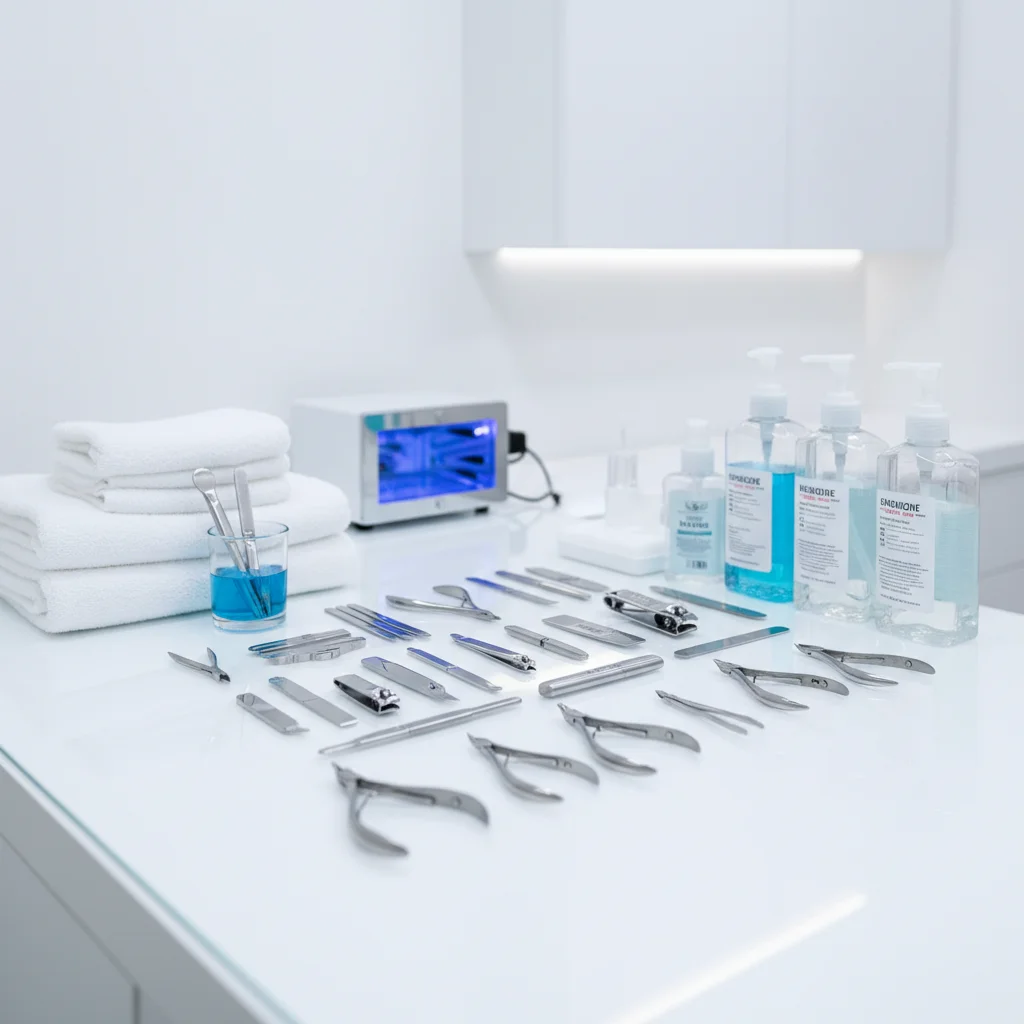
Metal tools: Wash with soap and water first, using a brush to remove debris. Then fully immerse them in an EPA-registered, hospital-grade disinfectant for the contact time specified on the label (typically 10 to 30 minutes). Rinse and dry with a fresh towel.
Work surfaces: Wipe down the entire station with disinfectant, including the table, arm rests, lamp, and any surfaces the client touched.
Foot basins: Drain completely, clean with soap and water, then fill with EPA-registered disinfectant and let it sit for the manufacturer’s recommended contact time. The EPA recommends a minimum of 10 minutes for hospital-grade disinfectant on foot spa surfaces.
Your hands: Wash thoroughly with soap and water for at least 20 seconds. If you were not wearing gloves, wash immediately and monitor your own nails in the following weeks.
Document the incident. Note the date, client name, what you observed, and what sanitation steps you took. This record protects you if questions arise later.
Legal Protections for Your Salon
Nail fungus is one of the most common sources of infection-related lawsuits against salons. Clients who contract onychomycosis at a salon can file claims alleging negligence, and courts have awarded settlements in cases where salons failed to follow proper sanitation protocols.
Protect yourself with these measures:
- Carry professional liability insurance. A single infection claim can cost tens of thousands of dollars.
- Follow your state board’s sanitation rules exactly. Shortcuts on tool disinfection and basin cleaning are the most common findings in enforcement actions.
- Keep a sanitation log. Record tool sterilization times, foot basin cleaning, and incidents. Inspectors and attorneys both look for documentation.
- Post your policies visibly. A sign stating “For your safety, we are unable to perform services on nails showing signs of infection” sets expectations before the conversation happens.
- Train every technician. Your newest hire needs to know the visual signs, the refusal language, and the sanitation protocol.
Educating Clients Without Overstepping
You can educate without diagnosing. There is a clear line, and staying on the right side of it protects both you and your client.
Things you can say: “Nail infections are very common and usually treatable. A doctor can confirm what’s going on.” Things you should never say: “You have nail fungus” (that is a diagnosis), “Try tea tree oil” (that is medical advice), or “This happened because you don’t take care of your feet” (that is shaming, and it is wrong).
Fungal nail infections are caused by dermatophyte fungi, yeasts, and molds that thrive in warm, moist environments. They are contagious and opportunistic, not a reflection of a person’s cleanliness. According to the American Academy of Dermatology, risk factors include aging, diabetes, weakened immune systems, and spending time in damp communal areas like pools and locker rooms.
Build Fungal Screening Into Your Salon Workflow
Do not wait until you spot a problem. Build fungal screening into your standard intake:
- Visually assess every client’s nails before starting any service.
- Include a health disclosure question on your intake form: “Are you currently being treated for any nail or skin conditions?”
- Keep referral cards for a local dermatologist or podiatrist at your station.
- Review your sanitation checklist weekly.
The client you turn away today with kindness and a referral is the client who comes back healthy next month and tells their friends about the salon that actually cared.
A solid client consultation form catches most health issues before the client ever sits down. For a broader look at salon hygiene, see our sanitation protocols guide.