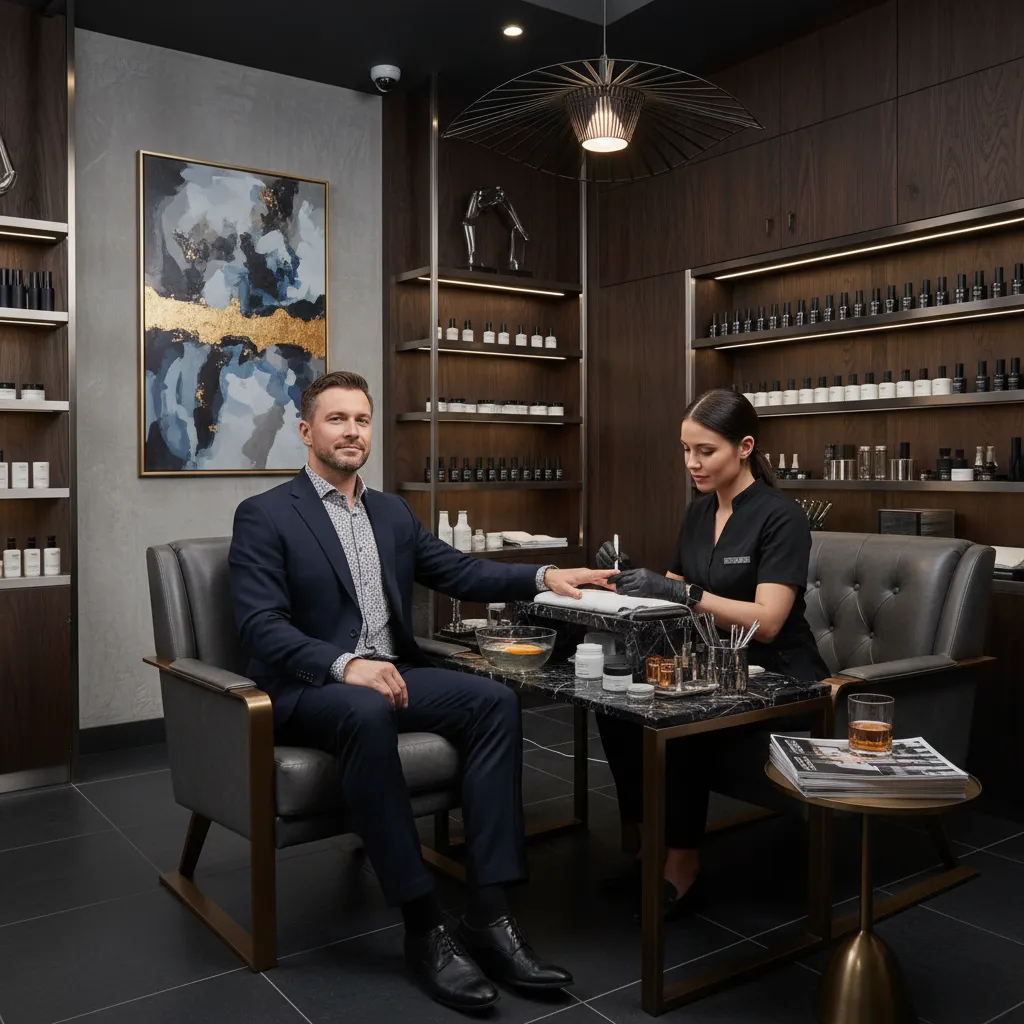
The global men’s grooming market hit $64.6 billion in 2025, growing at roughly 6% per year. Within the nail salon industry specifically, the men’s segment is expanding at 8.7% annually, outpacing the overall market growth rate of 7.9%. That gap represents real money sitting on the table for salon owners willing to serve male clients.
Yet most nail salons still market exclusively to women. The signage is feminine, the service menus assume female clientele, and the atmosphere signals “this space is not for you” to any man who walks through the door. Changing that does not require a rebrand. It requires a few deliberate adjustments.
Why Men Are Getting Manicures and Pedicures Now
Three forces are converging. First, cultural norms around masculinity have shifted. Athletes, executives, and public figures like Harry Styles and Bad Bunny have normalized nail care for men through social media and public appearances. What felt niche five years ago now registers as basic grooming.
Second, men with disposable income are spending more on personal care. The U.S. men’s grooming products market alone is projected to reach $30 billion by 2030, and that spending is branching beyond haircuts and shaving into skin care, nail maintenance, and spa services.
Third, the post-2020 emphasis on self-care created permission for men to explore services they previously dismissed. Once the door opened, many found that a clean manicure or a callus-reducing pedicure solved real problems they had been ignoring.
Men’s Nail Services to Add to Your Menu
The services themselves are mostly identical to what you already offer. The difference is positioning. Organizations like Guys That Nail It point out that the procedure for a nail treatment on a man is the same as on a woman. The gendered language is unnecessary.
Here is a practical service menu for male clients:
Sport Manicure - Nail shaping, cuticle care, hand exfoliation, and a matte clear coat. Position this around hand health and appearance in professional settings. 25 minutes, $30 to $40.
Executive Pedicure - Callus reduction, nail trimming, hot towel wrap, and a brief foot massage. Many men who work on their feet or exercise regularly need this service but have never considered a salon for it. 40 minutes, $50 to $65.
Nail Repair and Maintenance - Targeted service for damaged nails, hangnails, or post-athletic wear. Quick, functional, no frills. 15 minutes, $20 to $25.
Buff and Shine - A no-polish option that leaves nails looking clean and healthy. This is the gateway service for men who are hesitant about anything resembling nail polish. 15 minutes, $15 to $20.
Keep the names neutral or slightly masculine-coded. Avoid calling anything a “gentleman’s manicure” with air quotes. The names above work because they describe a function, not a gender.
How to Price Men’s Manicure and Pedicure Services
Men tend to be less price-sensitive than women for grooming services, partly because they have fewer reference points. Research from the U.S. Chamber of Commerce notes that male consumers entering the beauty space for the first time often default to mid-premium options because they associate higher prices with quality and simplicity.
Price your men’s services at the same level or 10% to 15% above your standard equivalents. The slight premium signals “this is tailored for you” without feeling like a surcharge. Most men will not comparison-shop across salons the way regular female clients might. They will find a place they are comfortable with and stick to it, which brings us to retention.
Male clients who find a salon they trust tend to be highly loyal. They rebook consistently and refer friends from the same social circles. One satisfied male client often becomes three within a few months.
Marketing Without Alienating Your Existing Clientele
This is where salon owners hesitate. The concern is that marketing to men will change the feel of the business and push away women. The reality is the opposite if handled correctly.
Separate landing page or section on your website. Create a dedicated page for men’s services with its own imagery and language. This lets you target men in search ads and social media without altering your homepage.
Targeted social media ads. Run Facebook and Instagram campaigns specifically to men aged 25 to 55 within your service radius. Use imagery of clean, well-maintained hands in professional or athletic contexts. Partnering with local male influencers or fitness personalities can accelerate trust-building.
Referral incentive for existing clients. Offer your current clients a discount for bringing a male partner, friend, or family member. Many men will try a salon for the first time because someone they trust recommended it.
Google Business Profile optimization. Add “men’s manicure,” “men’s pedicure,” and “men’s nail care” to your service descriptions. Men searching for these terms locally will find you before competitors who have not optimized for them.
In-salon environment. You do not need to redecorate. But consider having a few neutral magazines in the waiting area, offering a coffee or water option at check-in, and training staff to greet male clients without surprise or excessive explanation. The goal is to make the first visit feel normal.
Overcoming the Stigma Around Men’s Nail Care
The stigma around men visiting nail salons is declining rapidly but has not vanished entirely. Most men who are curious about nail care will not walk into a salon cold. They need a low-friction entry point.
That entry point is usually a specific problem: a cracked nail, rough calluses, an upcoming event where they want their hands to look sharp. Frame your marketing around solutions to these problems rather than around pampering or self-care. “Fix your wrecked cuticles” converts better than “treat yourself to a spa day” when the audience is male.
Once a man has his first positive experience, the stigma largely dissolves for him personally. He becomes your evangelist to other men in his circle. The lifetime value of converting one hesitant male client often exceeds the cost of acquiring five through ads, because his word-of-mouth carries credibility that advertising cannot replicate.
The Revenue Math
Consider a salon that books just four additional male clients per day at an average ticket of $45. That is $180 per day, roughly $4,700 per month, and over $56,000 in annual revenue from a demographic you were not serving before. Factor in higher retention rates, lower acquisition costs through referrals, and the tendency toward consistent rebooking, and the actual figure climbs higher.
The men’s segment of the nail salon market is projected to reach $25.9 billion globally by 2032. Salons that position themselves early will capture disproportionate market share in their local areas simply because most competitors have not bothered.
The opportunity is straightforward. The services already exist. The demand is growing. The only thing missing in most salons is the intention to serve this audience.
If you are launching new services, make sure your booking system lets men find and book them easily online. For guidance on pricing these additions, see our post on pricing nail services without undercharging.